
Birds are some of the most fascinating creatures on Earth! With their ability to fly, their colorful feathers, and their unique songs, birds captivate the curiosity of children and adults alike. Teaching kids about birds is a fantastic way to encourage a love for nature, develop observation skills, and introduce basic biology concepts in a fun and engaging way.
In this lesson, we’ll explore fun bird facts, discuss different types of birds, and incorporate exciting activities to make learning about birds a memorable experience for kids.
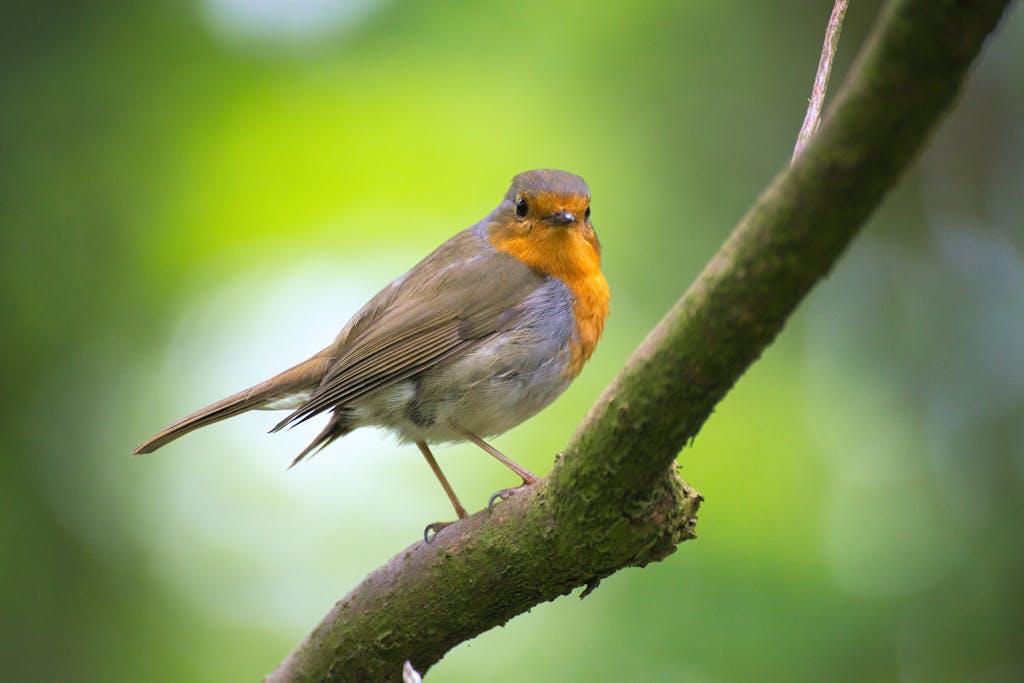
What Makes a Bird a Bird?
Before diving into fun facts, let’s first understand what makes a bird a bird! Birds belong to the animal kingdom Animalia and are in the class called Aves. There are over 10,000 different species of birds.
Here are some key characteristics that all birds share:
- Feathers: Unlike any other animal, only birds have feathers. Bird’s feathers help them fly, maintain body temperature, and sometimes even attract mates.
- Beaks: Birds don’t have teeth! Instead, they use their beaks to eat food, build nests, and even defend themselves.
- Eggs: Birds lay eggs to reproduce. Their eggs come in many sizes and colors depending on the species. A chicken holds the world record for laying the most eggs. Some chickens can lay up to 300 eggs a year!
- Hollow Bones: Most birds have hollow bones, which make them lightweight and help them fly.
- Warm-blooded vertebrates: They are more closely related to reptiles than mammals.
Fun Bird Facts to Amaze Kids
Now that we know what makes a bird a bird, let’s explore some interesting facts about these feathered friends!
1. Birds Are Everywhere!
Birds can be found on every continent, including Antarctica! Penguins are the most famous birds from this icy continent. Penguins are birds that can’t fly, but they’re amazing swimmers! Their wings act like flippers, helping them glide through the water. While tropical birds like parrots thrive in the rainforests.
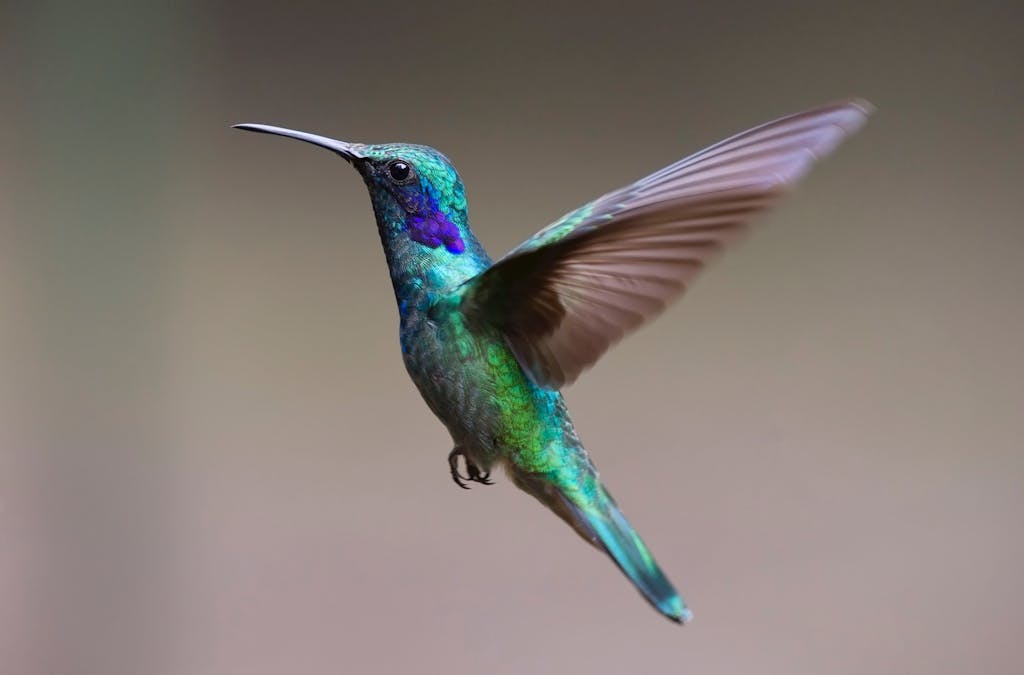
2. The Smallest Bird in the World
The bee hummingbird, found in Cuba, is the smallest bird in the world. These tiny birds are only about 2 inches long and weigh less than a penny! Hummingbirds can fly backward. They are the only birds that can hover in place and even fly backward thanks to their super-fast wingbeats.
3. The Biggest Bird in the World
The ostrich is the largest bird, standing up to 9 feet tall and weighing over 300 pounds! Even though ostriches can’t fly, they are fast runners and can run up to 60 miles per hour!
4. Birds Can Talk!
Some birds, like parrots and crows, are excellent mimics. Parrots like the African Grey can learn hundreds of words and even use them in context! The lyrebird can mimic almost any sound. This Australian bird can copy chainsaws, camera shutters, and even car alarms!
5. Some Birds Migrate Thousands of Miles
The Arctic tern travels over 44,000 miles each year, migrating from the Arctic to the Antarctic and back again.
6. Birds Have Unique Nests
Birds build nests in all kinds of places—on trees, cliffs, the ground, and even inside buildings! The weaver bird creates intricate hanging nests, while the emperor penguin keeps its egg on its feet!
7. Some Birds Sleep While Flying
The frigate bird can sleep while flying! These birds spend weeks in the air without landing, taking short naps while gliding. The common swift spends most of its life in the air. It can stay in flight for months without landing!
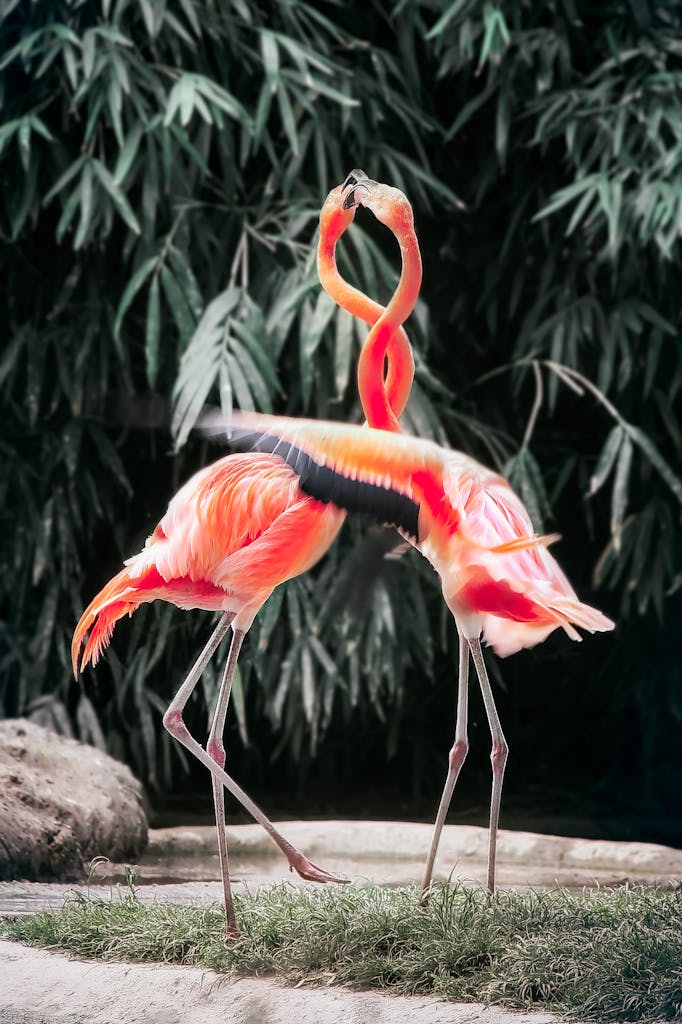
8. This Bird’s Food Determines its Color!
Flamingos aren’t actually pink at birth! They are born gray or white, and they turn pink because of the food they eat—like shrimp!
9. Smart Birds
Pigeons can recognize themselves in mirrors. They are one of the few animals that can do this, which means they are quite smart. Crows and ravens are excellent problem-solvers. They can use tools, remember faces, and even play tricks on other animals.
10. The Fastest Bird in the World
The peregrine falcon can dive at speeds over 240 mph, making it the fastest animal on Earth!
Types of Birds and Their Special Features
Birds come in all shapes and sizes, and they each have unique adaptations that help them survive in their environment. Let’s look at a few types of birds and their special features!
1. Birds of Prey
- Examples: Bald Eagles, hawks, Great Horned owl
- Special Features: These meat-eating birds have sharp talons, keen eyesight, and powerful beaks for hunting.
2. Water Birds
- Examples: Ducks, swans, herons
- Special Features: Webbed feet for swimming and waterproof feathers.
3. Songbirds
- Examples: Robins, sparrows, canaries
- Special Features: Melodious songs and small, lightweight bodies.
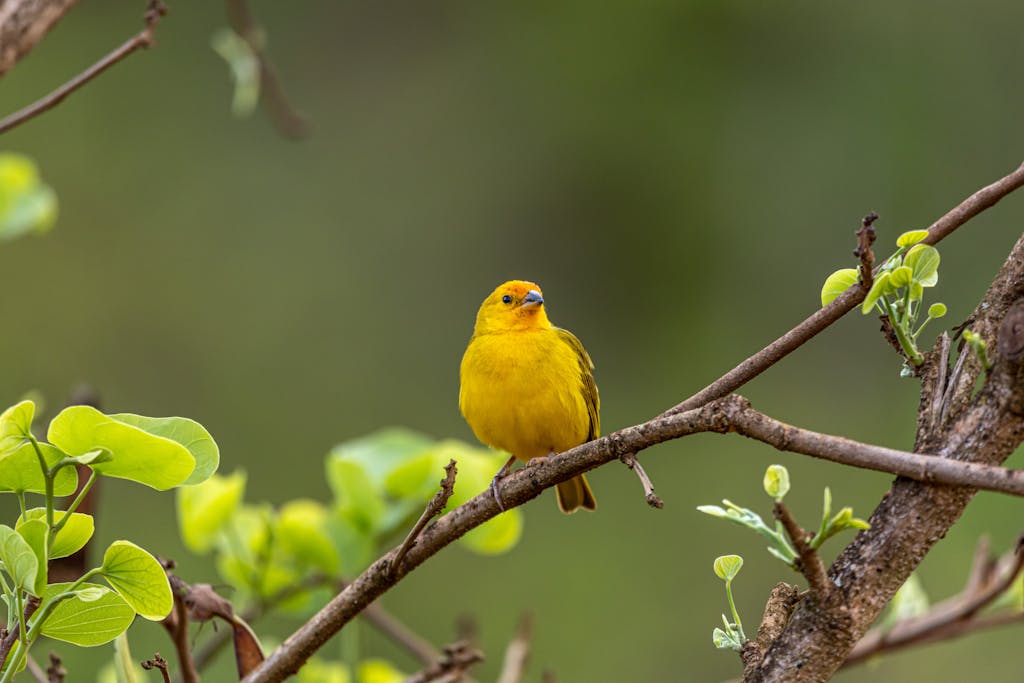
4. Flightless Birds
- Examples: Ostriches, Penguins, Kiwis
- Special Features: Strong legs for running or swimming instead of flying.
5. Nocturnal Birds
- Examples: Owls, Nightjars
- Special Features: Large eyes that provide great eyesight in the dark, great hearing, and silent flight to catch prey unnoticed.
6. Game Birds
- Examples: chickens, quail, turkeys
- Special Features: These birds are raised for their meat and eggs.
Types of Bird Beaks
Did you know that bird’s beaks are shaped differently and perfectly suite their diets?
1. Cracking Beaks
- Examples: cardinals and sparrows
- Special Features: a short, thick and cone-shaped beak
2. Probing Beaks
- Examples: hummingbirds
- Special Features: a tube-like, thin, and long beak
3. Hooked Beaks
- Examples: eagles and owls
- Special Features: a sharp and curved beak
4. Strainer Beaks
- Examples: ducks
- Special Features: a flat and wide beak
5. Tweezer Beaks
- Examples: robins
- Special Features: a thin and pointed beak
6. Pouch Beaks
- Examples: pelicans
- Special Features: a large and pouch-like beak
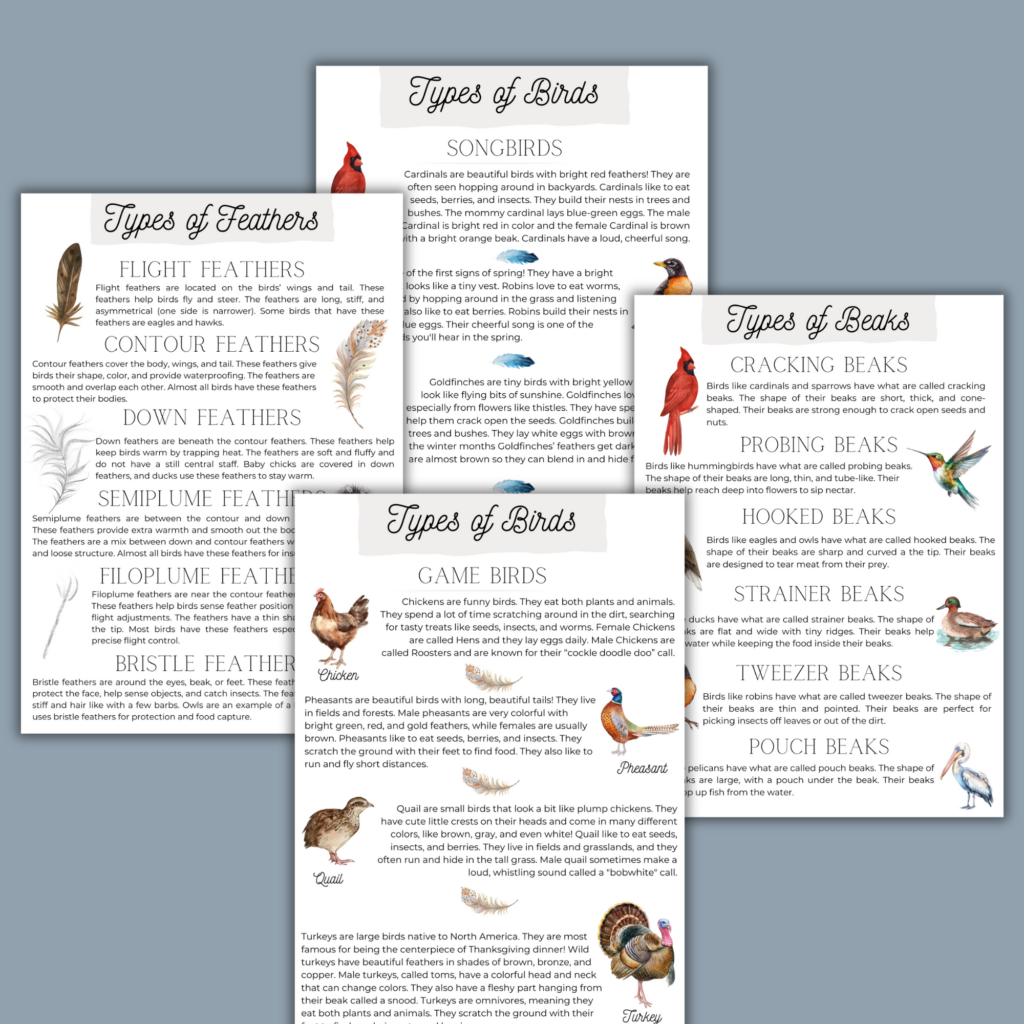
Types of Bird Feathers
Not only are birds the only animals that have feathers, but they have different types of feathers that have different functions.
1. Flight Feathers
- wing and tail feathers
- help birds fly and steer
2. Contour Feathers
- cover body, wings, and tail
- give birds their shape, color, and provide waterproofing
3. Down Feathers
- beneath the contour feathers
- help keep birds warm and maintain body temperature
4. Semiplume Feathers
- between the contour and down feathers
- provide extra warmth and smooth out body shape
5. Filoplume Feathers
- near the contour feathers but often hidden
- help birds sense feather position so that they can make flight adjustments
6. Bristle Feathers
- on the face, beak, and feet
- help protect the face, sense objects, and help catch insects
Hands-On Activities to Learn About Birds
Now that we’ve explored fascinating bird facts, it’s time to engage kids with hands-on activities that make learning about birds even more fun!
1. Bird Watching Adventure
Take kids outside to observe birds in their natural habitat. Provide them with binoculars and a bird identification guide. Encourage them to note the birds’ colors, sounds, and behaviors.
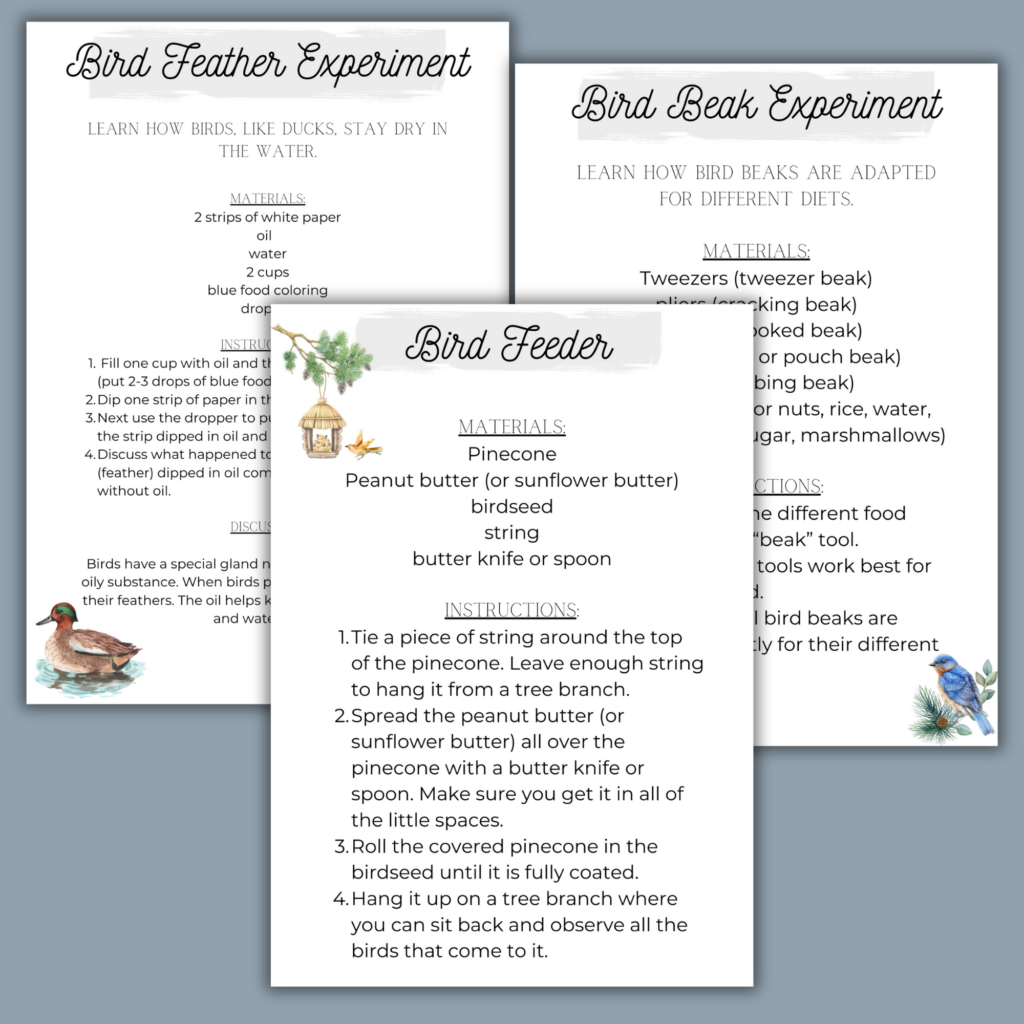
2. DIY Bird Feeder
Make a simple bird feeder using a pinecone, peanut butter, and birdseed. Hang it in the yard and observe which birds come to visit.
3. Create a Bird Nest
Challenge kids to build a bird nest using natural plant material like twigs, leaves, and grass. Discuss how birds construct their nests and why they need them.
4. Egg Experiment
Show kids how strong eggshells are by conducting an experiment. Try placing books on top of an egg (carefully!) to see how much weight it can hold before cracking. For more fun bird experiments, check out our All About Birds Unit Study.
5. Bird Call Challenge
Play different songs that birds sing and have kids guess which bird makes each sound. This activity helps them recognize birds by their calls.
6. Feather Investigation
Provide different types of feathers and let kids examine them under a magnifying glass. Discuss the role of feathers in flight, warmth, and camouflage.
Fun Bird-Themed Books for Kids
Reading books about birds can help kids learn more while enjoying fun stories. Here are some great choices:
- Owl Moon by Jane Yolen
- A beautiful story about a child and father searching for an owl at night.
- National Geographic Kids Bird Guide of North America by Jonathan Alderfer
- Learn all about birds that live in North America.
- The Boy Who Drew Birds: A Story of John James Audubon by Jacqueline Davies
- A story about the famous bird artist and scientist.
- A Nest Is Noisy by Dianna Hutts Aston
- A look at the different types of nests that birds create.
Interactive Bird Unit Study
Are you ready to jump into a unit study that teaches your kids all about these facilitating feathered friends?
Our All About Birds Unit Study is a must have study! Your children will learn all about…
- the different types of birds
- types of beaks
- types of feathers
- life cycle
- bird and egg anatomy
- bird experiments and activities
- Practice literacy skills: letter tracing, compare/contrast, bird vocabulary, scripture tracing, creative writing
- practice math skills: counting, more/less, skip counting
- fun activities: i-Spy, mazes, coloring sheets scavenger hunt

Why Learning About Birds Matters
Teaching kids about birds encourages curiosity, respect for nature, and a love for wildlife. Birds play an essential role in our environment by controlling pests, pollinating plants, and spreading seeds. By learning about birds, kids can become future conservationists who help protect these incredible creatures.
Next time you step outside, take a moment to listen to the birds singing, watch them fly, and appreciate their beauty. Who knows? You might just inspire a lifelong bird enthusiast!
Happy bird watching!
Do your kids love learning about animals? Check out this post on Arctic Animals. We know your kids will LOVE it!