
Are you looking for a fun and educational way to explore the secret world of bees with your kids? Whether you’re a homeschool mom planning your next science unit or simply searching for an engaging afternoon activity, honey bee worksheets and activities are the perfect blend of learning and hands-on fun. Bees are fascinating little creatures, and studying about the life of a bee helps kids connect with nature, understand the importance of pollinators, and explore topics in science, art, and even language arts.
In this post, we’re buzzing with excitement to share how you can use printable honey bee worksheets and activities to enrich your children’s learning.

Why Learn About Honey Bees?
Honey bees are vital pollinators, responsible for about one-third of the food we eat. From apples to almonds, many of our favorite foods wouldn’t exist without the hardworking honey bee. Beyond their role in agriculture, bees are a wonderful way to teach kids about ecosystems and even social behavior. Honey Bees are fascinating insects that your kids will love learning about. If I haven’t convinced you yet, here are 10 interesting facts that I know will get you excited about adding a Honey Bee Unit Study to your day!
1. Honey bees have five eyes!
That’s right—two big eyes on the sides of their head and three tiny eyes on top. The little ones help them sense light.
2. They talk by dancing.
Honey bees do a special “waggle dance” to tell their hive-mates where to find flowers with nectar and pollen. It’s like a bee GPS!
3. A honey bee can fly up to 15 miles per hour.
They’re tiny, but fast! They zip through the air to collect nectar from flowers and return to the hive.
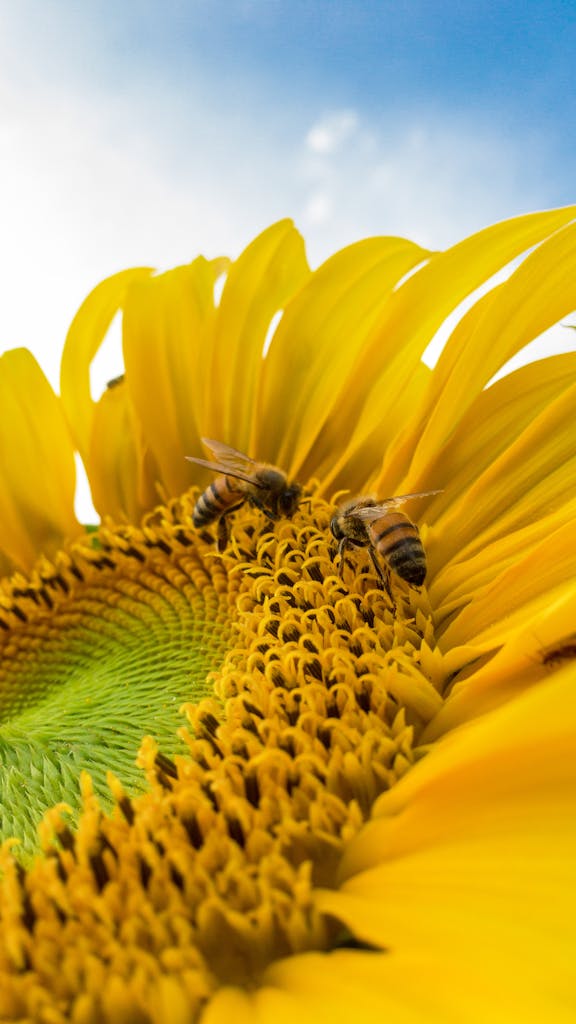
4. One bee makes only about 1/12 of a teaspoon of honey in her lifetime.
It takes a lot of bees to make one jar of honey—around 556 bees for a single pound!
5. Bees have smelly feet.
Well… kind of. They leave behind a scent from their feet to mark flowers they’ve already visited. That way, other bees know to check somewhere else.
6. Only girl bees do the work!
Worker bees (the ones who collect nectar, clean the hive, and take care of the queen bee) are all female. The boy bees, called drones, mostly hang around waiting to mate with a queen.
7. A Queen bee lays up to 2,000 eggs per day.
That’s some serious multitasking! The queen is the mom of almost every bee in the hive.
8. Honey never spoils.
Honey found in ancient Egyptian tombs is still edible today! It’s full of natural preservatives.
9. Bees have special pockets on their legs.
These are called pollen baskets, and they use them to carry pollen back to the hive.
10. Bees are super-clean.
They keep their hive tidy by taking out the trash and never going to the bathroom inside their home. Talk about polite roommates!
Honey Bee Worksheets and Activities
Now that I have convinced you that learning about honey bees with your young children is a must. Let me tell you about some worksheets and fun bee activities that will be a great addition to your learning.
1. Honey Bee Anatomy
Help your kids get up close and personal with a honey bee by using diagrams that label parts of the bee’s body. Your kids will discover its antenna, eyes, head, abdomen, thorax, and stinger.
Worksheets are great for visual learners and help kids connect the words with the actual parts of a bee’s body.
2. Life Cycle of a Bee
Introduce biology concepts with a bee life cycle activity. Teach your young kids how the bee develops from an egg – larva – emerging – pupa – adult.
This is a great opportunity to talk about metamorphosis and compare the life cycles of a butterfly or frog to the bee life cycle.
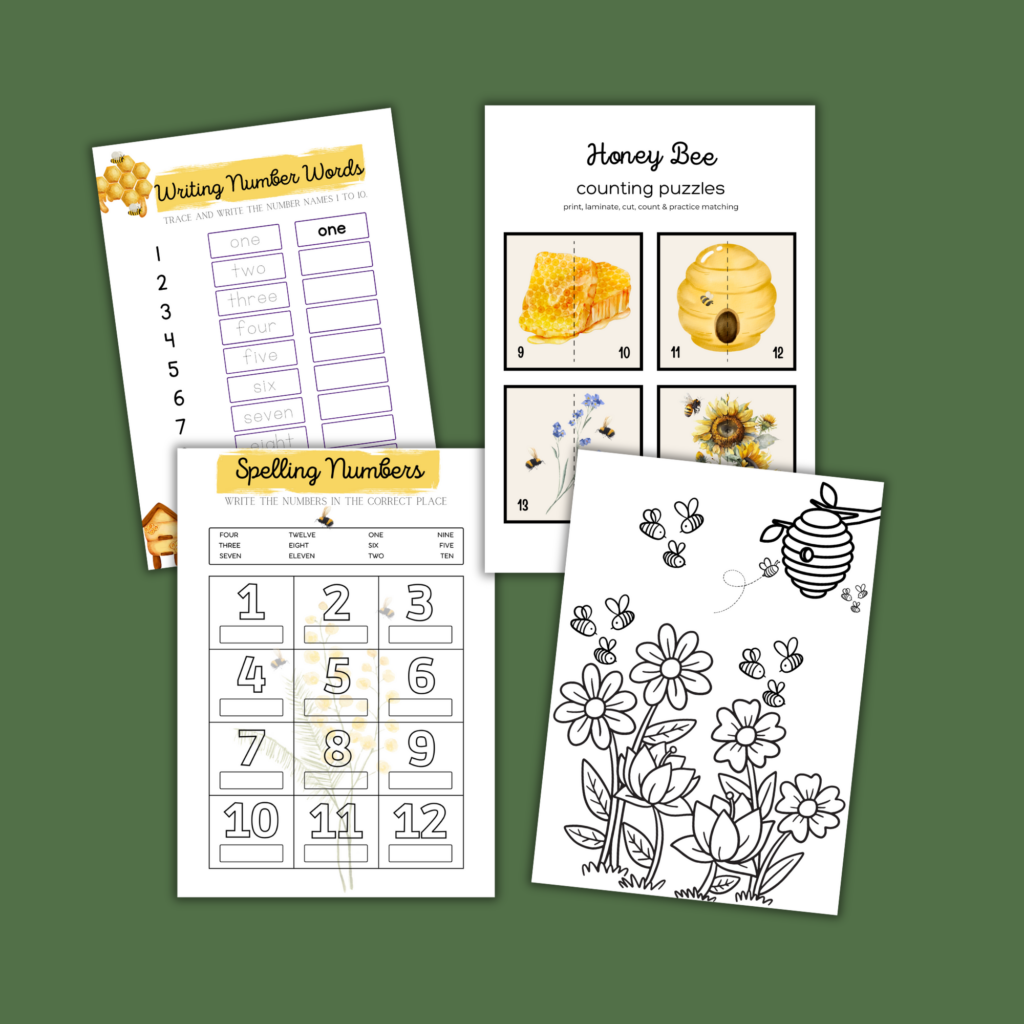
3. Bee-Themed Math Worksheets
Turn bee buzz into math fun! Bee-themed math activities can include:
- Counting bees in a hive
- Addition and subtraction word problems with bees and flowers
- Skip counting with hexagons (hello, honeycomb!)
- Our unit study includes lots of fun worksheets that allow your children to practice their math skills with a fun bee theme!


4. Honeycomb Art and Geometry
Did you know honey bees build their hives with perfect hexagons? This is the perfect segue into a lesson on shapes, symmetry, and patterns.
- Print out hexagon templates and build your own honeycombs
- Symmetry drawing sheets using bee wings or hive shapes
- Art projects with painted bubble wrap to mimic honeycomb texture
- Use our step-by-step worksheet to learn how to draw a bee.
5. Creative Writing and Reading
Bring language arts into your bee study with literacy-focused worksheets.
- Read bee books and have your students answer comprehension questions. A fun book to explore with your kids is The World of Bees by Emily Bone
- Creative writing prompts can be a fun way to include what they have learned about bees into a language arts assignment.
- Story sequencing worksheets.
6. Bee Coloring Pages
Sometimes, a simple coloring page is all your child needs to unwind and reflect.
These make great quiet-time or morning basket additions.
Ideas for a How to use our Honey Bee Unit Study
- Day 1: Read a book like The Honeybee by Kirsten Hall. Follow up with our honey bee worksheet that teaches about the honey bee anatomy.
- Day 2: Explore the bee life cycle with sequencing activities.
- Day 3: Play our True/False bee game to refresh what you have learned about these amazing insects.
- Day 4: Do some math with our bee themed worksheets.
- Day 5: Finish the week with bee writing prompts and bee coloring pages.
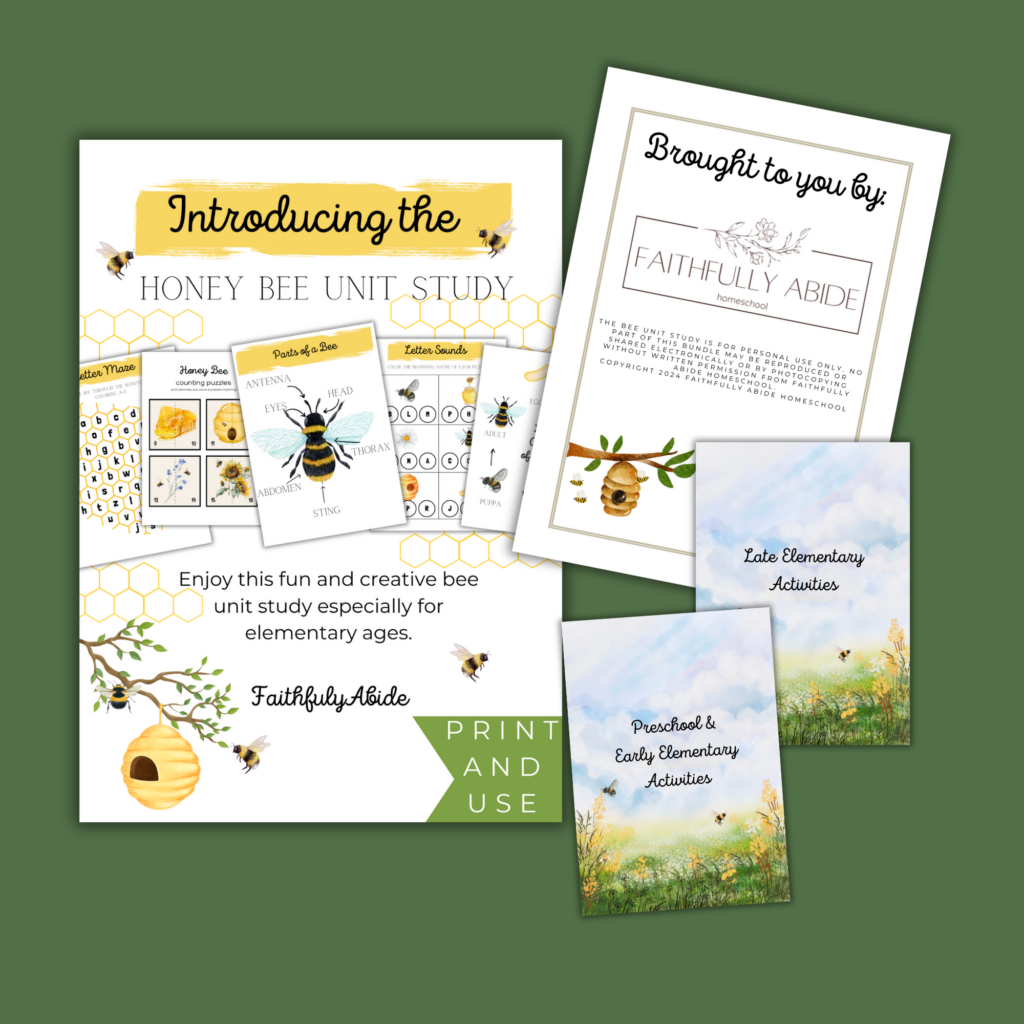
These cute bees are more than just cute and buzzy—they’re hardworking, fascinating creatures that offer endless learning opportunities for kids. With printable worksheets and activities, you can turn a simple science topic into a rich, cross-curricular adventure. Whether you’re using them as part of a larger unit study or just for some afternoon learning fun, our printable pack is a fantastic way to help your kids connect with nature, practice important skills, and grow their curiosity.
So, grab some books and our Honey Bee Unit Study and let the learning take flight!
If your kids loved learning all about this amazing insect, then check out this post for some more Insect Learning!


